
The roadmaps helped me stop guessing. I could finally see why one result changes the next test instead of memorizing isolated facts.
Clinical microbiology & ASCP review
Learn the bench, not the list.
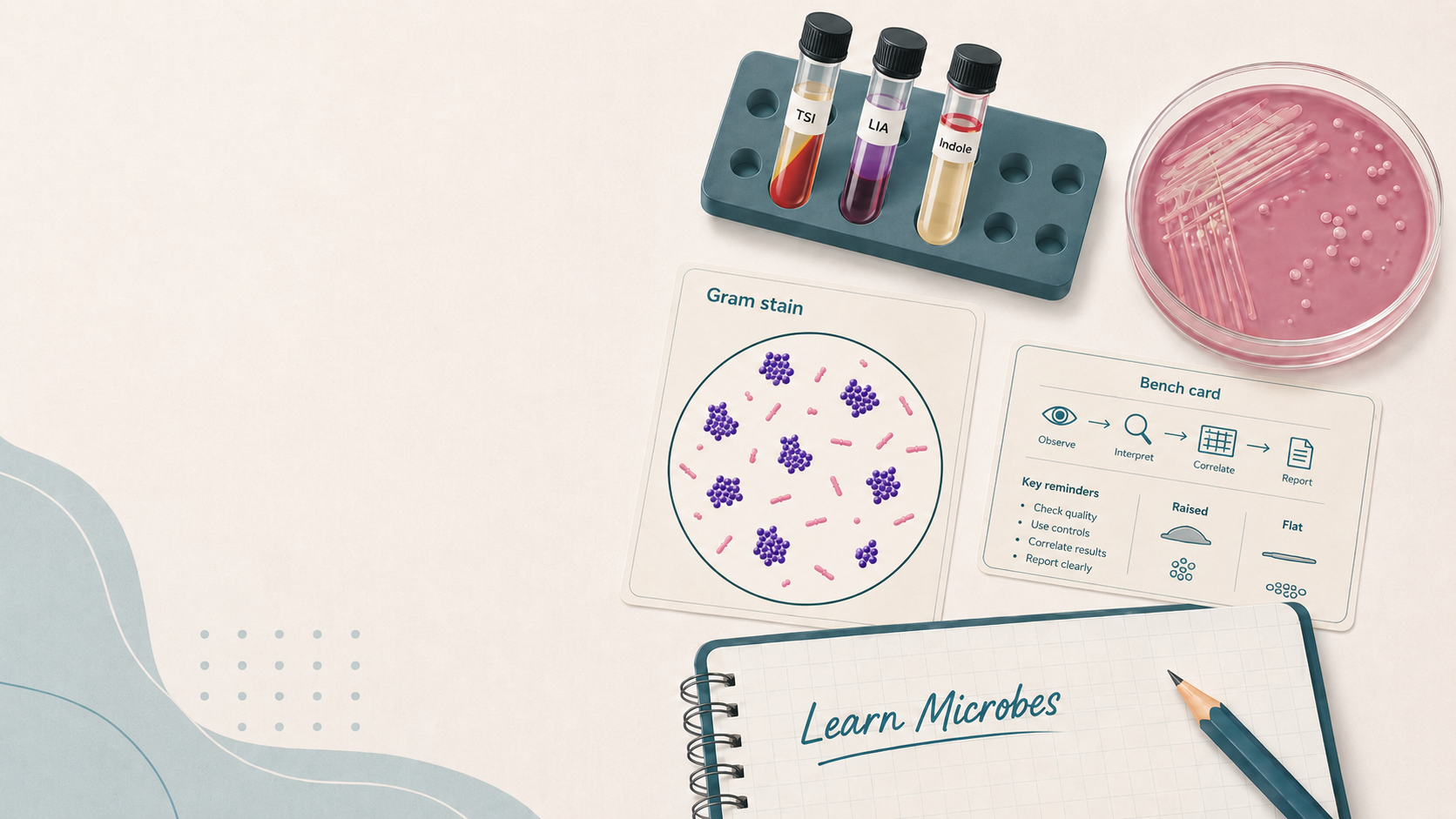
Learn clinical microbiology the way the bench actually thinks: follow Gram stain, colony clues, media, key tests, and the next safest step.
Built by a working micro lab tech. Free to use.
What are you trying to do?
Identify an unknown isolateGram stain, then morphology, then the branch-point tests that narrow it.Open the workupRead a bench test resultReactions, QC organisms, and the reading traps that cost points.Open bench testsStudy for the M(ASCP) examContent areas mapped into study passes you can finish in a sitting.Open ASCP prepSee what it looks likeBench cards for plates, tubes, and Gram films, with the trap called out.Open the atlasTest what I rememberQuizzes, flashcards, and staged cases with explanations on every miss.Open practiceLearn a topic from scratchPlain-language topics that end in what you would do at the bench.Open the learn hub
Free to use
Start free. Learn the patterns.
Everything here is open without an account. Sign in only when you want saved quiz history and weak-area tracking.
Riddle of the day
Diagnostic quick hit
I am a yeast that can make germ tubes quickly in serum and is a common cause of mucosal candidiasis. Who am I?
Featured bench card
L-Pyrrolidonyl Arylamidase (PYR) Test
A bench guide to the PYR test, used for the presumptive identification of Group A streptococci (S. pyogenes) and Enterococci by detecting PYRase activity.
Open bench cardLearner feedback
Built around real study pain points
I keep coming back before lab because the guides explain the bench logic in plain language. It feels like studying with structure instead of panic.
The test explanations and workflow pages make it easier to connect class material to what actually happens in a clinical micro workup.
I use the visual cards before practicals because the reaction patterns stick faster when I can picture the plate or tube.
The ASCP review flow gives my students a cleaner way to connect specimen quality, ID logic, and reporting traps.
Saved quiz history makes weak areas obvious. I can review what I missed instead of restarting from the beginning every time.
The biochemical test pages are concise enough for quick review but still explain what the reaction actually means.
I like that safety escalation is built into the study flow. It feels closer to real bench thinking than most review sites.
The search makes it easy to jump from an organism clue to the right guide, visual, or test explanation during review.
It helps me teach first-pass organism ID without overwhelming students with every exception on day one.
The practice questions feel useful because the explanations point me back to the bench pattern, not just the answer.
I keep the roadmaps open while reviewing unknowns. They help me slow down and choose the next best test.
The layout feels like a clean lab notebook. It is easier to focus when the content is practical and not flashy.
For onboarding, I like having a place that explains why a result matters before jumping to organism names.
The roadmaps helped me stop guessing. I could finally see why one result changes the next test instead of memorizing isolated facts.
I keep coming back before lab because the guides explain the bench logic in plain language. It feels like studying with structure instead of panic.
The test explanations and workflow pages make it easier to connect class material to what actually happens in a clinical micro workup.
I use the visual cards before practicals because the reaction patterns stick faster when I can picture the plate or tube.
The ASCP review flow gives my students a cleaner way to connect specimen quality, ID logic, and reporting traps.
Saved quiz history makes weak areas obvious. I can review what I missed instead of restarting from the beginning every time.
The biochemical test pages are concise enough for quick review but still explain what the reaction actually means.
I like that safety escalation is built into the study flow. It feels closer to real bench thinking than most review sites.
The search makes it easy to jump from an organism clue to the right guide, visual, or test explanation during review.
It helps me teach first-pass organism ID without overwhelming students with every exception on day one.
The practice questions feel useful because the explanations point me back to the bench pattern, not just the answer.
I keep the roadmaps open while reviewing unknowns. They help me slow down and choose the next best test.
The layout feels like a clean lab notebook. It is easier to focus when the content is practical and not flashy.
For onboarding, I like having a place that explains why a result matters before jumping to organism names.